
SAT考試注重批判性思維能力考察
博雅教育是美國大學教育中很重要的部分,而博雅教育的精髓是批判性思考,它也是美國大學在選拔學生、培養學生時的主要标尺和目标。美國大學入學考試SAT考試是公認的智力測試,SAT考試的閱讀部分本身就叫做批判性閱讀。
新東方VIP老師一直向學生不斷強調通過閱讀來提升批判性思考能力這一重要理念。然而,我們何必舍近求遠,何不把備考SAT的過程中也當成是一個享受閱讀樂趣,提升批判性思考的過程呢?下面就以一篇SAT閱讀文章為例來說明什麼是批判性思考,以及如何通過閱讀來提升批判性思考。想要了解更 多SAT考情和課程信息,請緻電400-720-6868咨詢。英文原文如下:
The following passage is from a 1992 publication in which the author, a physicist, discusses “reality” and the models that human beings use to understand the universe.
Perhaps you’ve seen the painting: a pipe, depicted with photographic realism, floats above a line of careful script that reads “Ceci n’est pas une pipe”- “This is not a pipe.” Rene Magritte painted The Treachery of Images in the 1920s, and people have been talking ever since about what it means.
Did Magritte intend to remind us that a representation is not the object it depicts- that his painting is “only” a painting and not a pipe? Such an interpretation is widely taught to college students, but if it is true, Magritte went to an awful lot of trouble- carefully selecting a dress-finish pipe of particularly elegant design, making dozens of sketches of it, taking it apart to familiarize himself with its anatomy, then painting its portrait with great care and skill- just to tell us something we already knew. In another canvas, The Two Mysteries, Magritte is even more insistent: the original pipe painting, complete with caption, is depicted as sitting on an easel that rests on a plank floor, but above that painting, to the left, hovers a second pipe, larger (or closer) than the painted canvas and its frame. What we have here is a painting of a paradox. Obviously the smaller pipe is a painting and not a pipe. But what is the second pipe, the one that looms outside the represented canvas? And if that too is but a painting, then where does the painting end?
It seems to me that the roots of the paradox reside in the concept of the frame. When we look at a realistic painting- a portrait of a historical figure- we accept by convention that the portrait represents a real person and actual objects. When that convention is denied, as in Magritte’s pipe paintings, the point is not to remind us that paintings are not real. That much is true but trivial. The point is to challenge the belief that everything outside the frame is real.
The enemy of artists like Magritte is naïve realism- the dogged assumption that the human sensory apparatus accurately records the one and only real world, of which the human brain can make but one accurate model. The truth, of course, is that nobody can grasp reality whole, that each person’s universe is to some extent unique, and that this circumstance makes it impossible for us to prove that there is but one true reality.
If modern artists have labored to call attention to the fact that our understanding of reality is limited and variegated, so too have modern scientists. Many people are surprised to hear this. They think of science as a collection of hard facts mined from bedrock reality, through a process as uncreative as coin collecting. The scientists, however, have come to know better. Astronomers understand that each act of observation- photographing a galaxy, taking an ultraviolet spectrum of an exploding star- extracts but a small piece of the whole, and that a montage of many such images is still only a representation, a painting if you will. The quantum physicists go further: they appreciate that the answers they obtain through experiment depend significantly on the questions they ask, so that an electron, asked if it is a particle or a wave, will answer “Yes” to both questions. Neuroscientists have learned that the brain is no monolith, either. Each of us harbors many intelligences, and insofar as my various minds take varying views of reality-in terms, say, of spatial relationships versus language, or of sentimental versus rational education- I can no more legitimately impose a single model on myself than I can expect to impose it on others.
This is not to say that every opinion about the universe deserves equal attention, as if schoolteachers should be enjoined to give equal weight to the flat-Earth theory, ESP, or the existence of extraterrestrials. That no one theory of the universe can deservedly gain permanent predominance does not mean that all theories are equally valid. In fact, to understand the limitations of science (and art and philosophy) can be a source of strength, emboldening us to renew our search for the objectively real even though we understand that the search will never end. I often reflect on a remark made to me one evening over dinner by a famous scientist: “The world is a fantasy, so let’s find out about it.” To me, that heroic statement encapsulates the spirit of science: to seek to learn something while accepting that one will never know everything.
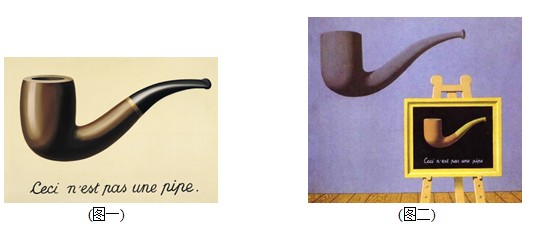
在本篇SAT閱讀材料中,作者先是從一幅Rene Magritte于1920年代畫的一幅名為The Treachery of Images的畫(請見圖一)說起。這幅畫裡畫的是一支很逼真的煙鬥,下面用法語寫着”這不是一支煙鬥”。緊接着作者又描述了Magritte畫的另外一幅名為The Two Mysteries的畫(請見圖二)。這幅畫中俨然安放着剛才提到的第一幅畫,而且在那幅畫外又出現了另外一支煙鬥,仿佛更大也離我們更近了。說到這裡,筆者就指出,如果第一幅畫正如Magritte說指出的它并不是一支煙鬥的話,那麼第二幅畫中出現在畫外的那支煙鬥是什麼?作者進一步指出,顯然畫家的用意不是花這麼大的功夫告訴我們畫畫得再逼真也終究是畫,而不是實物。他還指出要真正理解畫家的用意關鍵在于那個畫框,理解它的概念為何。他說畫家的用意在于挑戰出現在畫框之外的任何事物都是真實存在這一信念(The point is to challenge the belief that everything outside the frame is real).
考察考生批判性思考能力的題目在SAT考試中非常常見,通過此篇SAT考試批判性閱讀材料,SAT考生可以了解到批判性思考中的一個重要方法,就是不将任何東西視為理所當然。作為思考上的思考(the thinking of thinking)的一門藝術,它要求作為人的我們要不斷審視我們有可能存在的認識上的誤區,自覺或不自覺陷入的偏見、成見、扭曲、不加批判接受的社會規則和禁忌,進而為自我利益或既得利益中存在錯誤的犧牲品。
新東方VIP老師在SAT考試授課中,會通過大量的SAT真題訓練SAT考生的批判性思維能力,幫助SAT考生從容應對SAT考試。
新東方上海學校VIP學習中心
聯系我們>>
新東方VIP咨詢電話:400 720 6868
新東方VIP中心網站:http://shvip.xdf.cn
